Belgrade Real Estate Market 2026: Prices, Trends & What Buyers Should Know
“Is it still a good time to buy in Belgrade?” is one of the most-searched questions about the city’s property market right now. Here’s what the 2026 data actually shows.
Current Prices in Belgrade
As of 2026, the average apartment price in Belgrade sits at roughly €2,600 per square meter, based on official transaction data from Serbia’s Republic Geodetic Authority (RGZ). In absolute terms:
- Median property price: around €135,000
- Average property price: around €156,000 (pulled higher by luxury sales in central and Waterfront-area neighborhoods)
- Typical transaction range: roughly 80% of sales fall between €70,000 and €250,000
Belgrade remains notably more affordable than most European capitals, even as it has become the clear price leader within Serbia — the national median sits at closer to €65,000–€96,000, well below the capital.
Growth Has Slowed — On Purpose, Not by Accident
Belgrade apartment prices rose roughly 5–6% year-over-year through 2025 and into 2026. That’s a meaningful step down from the near-vertical price growth of 2020–2022, but analysts describe this as a “normalization” phase rather than a correction — less speculative fever, more selective buying, and no evidence of an actual price drop on the horizon. Forecasts for 2026 as a whole center on 4–7% growth for the capital.
Where Prices Are Moving Fastest
Neighborhood-level data from 2025 showed some notable outliers: Zvezdara rose around 19% and Stara Rakovica around 18%, both significantly outpacing the citywide average — a reminder that “the Belgrade market” isn’t one uniform number, and micro-location still drives a lot of the variation buyers see.
New-Build vs. Resale
New-build apartments in Belgrade typically carry a 15–25% premium over comparable existing units. High construction and labor costs, plus limited supply of well-located land, mean this premium isn’t expected to shrink — new construction prices are seen as unlikely to fall even if broader demand softens.
Who’s Buying
Foreign buyers remain an active part of the market, with Russian nationals reported as the leading foreign buyer group, concentrated in Belgrade, Novi Sad, and Subotica. Meanwhile, the domestic side of the market has shifted too: mortgage-financed purchases jumped from about 9% to 15% of all Belgrade transactions between 2024 and mid-2025, showing that credit access is becoming a bigger factor in demand, not just cash buyers.
What About the Rental Market?
This is worth flagging directly for anyone weighing a buy-to-rent strategy: Belgrade’s long-term rental market has actually softened in recent years, with rental prices down roughly 10% in the past year and around 30–40% below the peak seen during the post-2022 migration surge. At the same time, market analysts describe the rental sector — particularly in Belgrade — as structurally undersupplied, with demand still rising for long-term leasing in the right locations. For short-term and mid-term rentals specifically, the picture is different again, and depends heavily on location, property type, and professional management.
Is 2026 a Good Time to Buy in Belgrade?
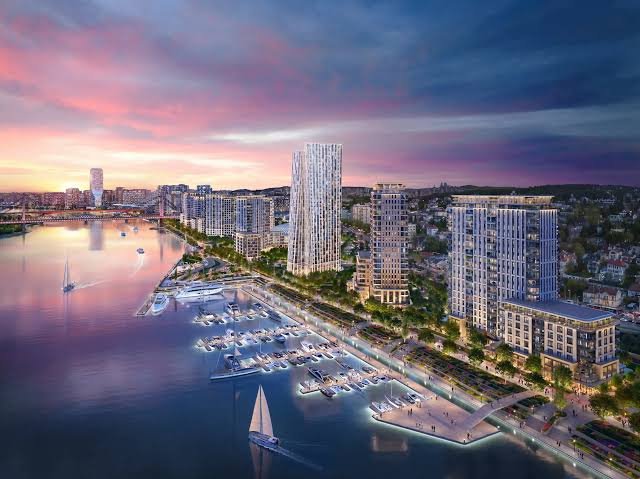
The honest answer, based on the data: it depends on where. The market currently leans toward sellers in prime, well-located, newer apartments — including Belgrade Waterfront, Vračar, Dorćol, Dedinje, and Senjak — while buyers have noticeably more negotiating room in peripheral districts. With price growth now in the mid-single digits rather than the double-digit surges of a few years ago, and Q1 2026 transaction value hitting a record €2 billion nationally, the market is active without being overheated.
Thinking about how a Belgrade property — new or existing — could perform as a managed short-term rental?Talk to houserz.co. We work with high-end owners across Belgrade Waterfront and can walk you through realistic income projections based on current market conditions.